


02
Commodity Category
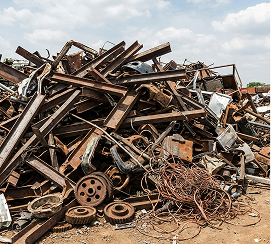
Check whether your commodity belongs to at least one of the waste categories.

04
Waigani and Basel Conventions
Review Waigani and Basel Conventions guidelines and application forms prior to submitting MTP application.

01. Eligible countries
Check if your exporting state is eligible for the MTP
Swire Shipping
Feeder
All SPREP member PICTs are eligible to apply for the MTP initiative. However, as Swire Shipping does not service all international ports, certain segments of the shipment may need to be transported via a third-party vessel. Any associated third-party or feeder vessel costs will be applied, and these charges will be the responsibility of the shipper. The ports indicated on the map represent locations serviced by Swire Shipping.
02. Commodity Category
Only non commercial and low value waste materials are eligible for the MTP discount. The following commodities are accepted under the MTP initiative. All items must be presented in a clean and thoroughly dried condition and must be completely free of any food residue.
List of Non-Hazardous Waste Stream
Plastic
- PET (Polyethylene Terephthalate) Plastic
- HDPE (High-Density Polyethylene) Plastic
- PVC (Polyvinyl Chloride) Plastic
- LDPE (Low-Density Polyethylene) Plastic
- PP (Polypropylene) Plastic
Cardboard (without Mineral Oil-Based Inks, UV-Curable Inks, Solvent-Based Inks, Heavy Metal-Based Pigments, Carbon Black Ink, Carbon Black Ink).
- Corrugated Cardboard
- Paperboard or Chipboard
Paper (without Mineral Oil-Based Inks, UV-Curable Inks, Solvent-Based Inks, Heavy Metal-Based Pigments, Carbon Black Ink, Carbon Black Ink).
- White and Colored Paper
- Newspaper, Magazines and brochures
- Phonebooks
- Envelopes (including window-faced)
- Manila folders and binder dividers
Glass
- Wine, Beer and RTD beverage bottles (without caps)
- Glass Jars (without lids)
List of Hazardous Waste Stream
1
Medical and pharmaceutical waste
2
Waste Oil
3
Expired pesticides
4
Waste chemicals
5
Expired fire suppression equipment
6
E-Waste
7
Sewage and sewage sludge
8
Explosive substance
9
Incineration ash
10
Asbestos
11
Printed Cardboards
12
Ozone Depleting Substances (ODS)
13
Paper and Cardboard products with Mineral-Based Inks, UV-Curable Inks, Solvent-Based Inks, Heavy Metal-Based Pigments, Carbon Black Ink or Carbon Black Ink.
Note: Some of the commodities listed above may be restricted or prohibited by certain shipping lines and may be subject to specific packaging requirements.
03. Documentation Requirements
The following supporting documents are required during application.
For Non-Hazardous Waste
The shipper is required to submit an export permit with the application. However, in some jurisdictions, a business licence may already include a provision allowing the export of recyclables. In such instances, a copy of the business licence can be provided as an alternative.
The consignee’s import permit must be attached to the application. If unavailable, a business licence permitting the import of recyclables may be submitted. Where neither is available, the consignee must provide written confirmation (letter or email) acknowledging the shipment and confirming receipt at the designated port within three months of the communication date.
Please provide photos of the commodity, either during the packing process or of the item itself.
For Hazardous Waste
The shipper is required to submit an export permit with the application. However, in some jurisdictions, a business licence may already include a provision allowing the export of recyclables. In such instances, a copy of the business licence can be provided as an alternative.
The consignee’s import permit must be attached to the application. If unavailable, a business licence permitting the import of recyclables may be submitted. Where neither is available, the consignee must provide written confirmation (letter or email) acknowledging the shipment and confirming receipt at the designated port within three months of the communication date.
Please provide photos of the commodity, either during the packing process or of the item itself.
Submit completed Multimodal Dangerous Goods Form – providing formal certification of the hazardous materials being shipped, including their classification, quantity, and handling requirements to ensure safe and compliant transport.
Safety Data Sheet (SDS) providing information on the chemical’s hazards, safe handling, transport requirements, and emergency response measures.
Transboundary movement permit, either under the Waigani Convention or the Basel Convention.
Insurance must be in place to provide financial coverage for potential environmental damage, accidents, or liabilities arising during the transport and disposal of hazardous waste
04. Waigani and Basel Conventions
The Waigani and Basel Conventions are regional environmental agreements developed to protect Pacific Island countries from the risks associated with hazardous and radioactive wastes. Formally titled the Conventions to ban the importation into Forum Island Countries of Hazardous and Radioactive Wastes and to Control the Transboundary Movement and Management of Hazardous Wastes within the South Pacific Region, they were adopted in 1995 and entered into force in 2001. The Waigani and Basel Conventions prohibit the import of hazardous and radioactive wastes into Pacific Island countries and regulate their movement within the region, promoting environmentally sound waste management practices.
Under the Moana Taka Partnerships (MTP), compliance with the Waigani and Basel Conventions is a key eligibility requirement. Applicants must obtain all relevant approvals, complete required notification and consent documentation, and ensure that waste movements meet national and regional regulatory obligations. This alignment helps safeguard Pacific environments and communities while supporting responsible recycling and recovery of wastes. Applicants are strongly encouraged to review the official Waigani and Basel Conventions guidelines and application forms prior to submitting their Moana Taka applications to ensure full compliance.
Learn More About the Waigani and Basel Conventions
05. Contact us
Confused whether your commodity qualifies for MTP initiative? Contact us now for clarification.