

The Refeyn SamuxMP is a mass photometer optimized for adeno-associated virus (AAV) characterization and is an essential analytical tool for laboratories working with AAVs.
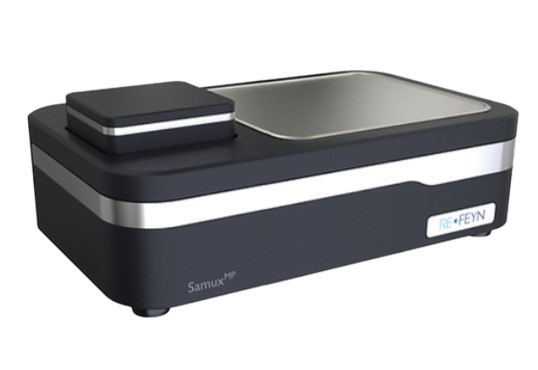
The Refeyn SamuxMP is a mass photometer optimized for adeno-associated virus (AAV) characterization and is an essential analytical tool for laboratories working with AAVs. SamuxMP mass photometry measurements are quick and require very little sample.
The SamuxMP precisely measures the empty/full capsid ratio for AAVs of any serotype as well as the quantities of partially filled and overfilled capsids. It can also detect impurities and aggregation and give a rough capsid titer estimate as part of the standard data analysis procedure.
- Quantitative characterization of AAVs of all serotypes
- Easy measurement of empty/full ratio of AAV capsids
- Rapid analysis requiring minimal sample
- User-friendly operation
Transformative AAV analytics
Mass photometry is a bioanalytical technology that measures the mass of individual AAV particles in solution, quickly and using small amounts of sample.
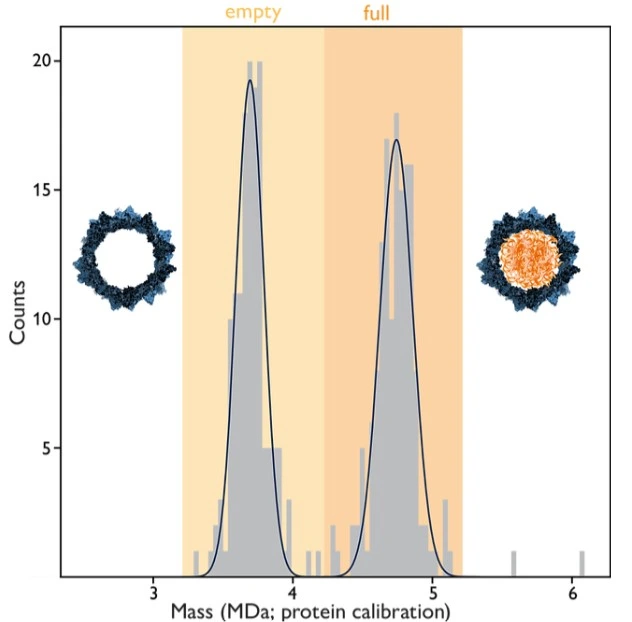
Mass photometry is ideally suited for measurements of empty/full capsid ratios. Filled AAV capsids have greater mass than empty capsids, so they can be readily distinguished from empty capsids on mass photometry histograms (Fig 1).
Serotype-agnostic AAV analytics
The SamuxMP mass photometer can measure AAV capsids of any serotype without the need for protocol adjustments.
Figure 2 shows SamuxMP measurements of empty AAV capsids of four different AAV serotypes.
For each sample, the mass photometry measurements with the SamuxMP revealed a single, symmetric peak at the expected mass, confirming that the SamuxMP produces consistent results across serotypes.
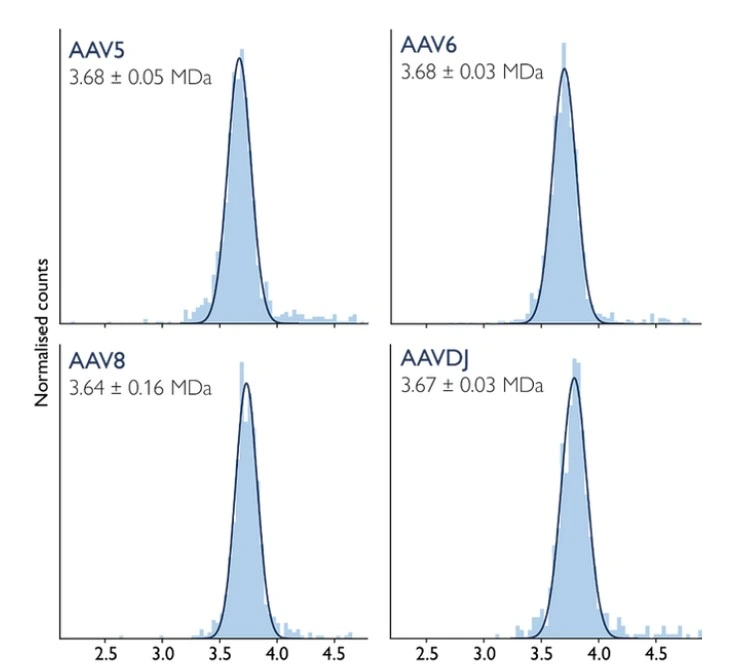
Figure 2 Mass photometry measurements of empty AAV capsids of different serotypes on the SamuxMP. Mass histograms for four different AAV serotypes, with the mass and standard deviation calculated from three technical replicates.
For more details, please click on More Information