

Cryopreserved vial of human cord blood isolated CD34+ iPS cells (~500,000 cells)
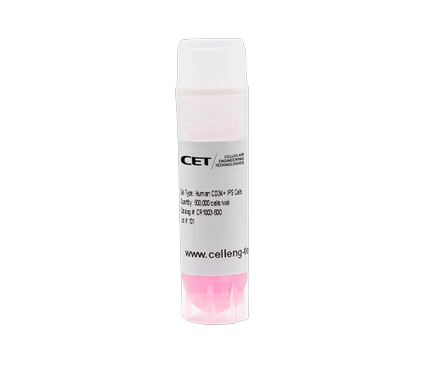
CD34+ cells isolated from cord blood were reprogrammed with our patented episomal, virus-free method using a proprietary mix of vectors, excluding l-Myc, c- Myc, and Lin28 transcription factors.
The cell line was validated for pluripotency based on colony morphology, alkaline phosphatase expression, and expression of SSEA-4. Cells are free of Mycoplasma and exhibit classical morphology and growth characteristics.
CD34+ cells contain hematopoietic stem and progenitor cells and are more naive than similar cells derived from other tissue sources. They are reported to have higher proliferative, engraftment, and multipotent potential. These cells can be used in immunology, stem cell biology, and cell therapy research applications.
Vial contains approximately 500,000 cells. Shipped with dry ice.
- Ethically sourced, healthy stem cells reprogrammed from Human CD34+ cells using our patented method
- Ready-to-use, fast growing cell line with 20 hour doubling times
- Higher proliferative, engraftment, and pluripotent potential versus other tissue sources
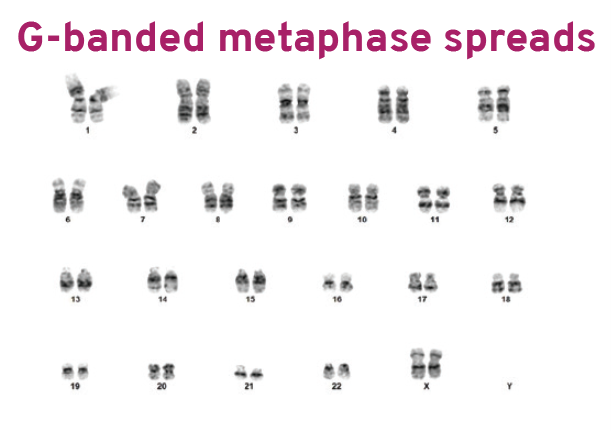
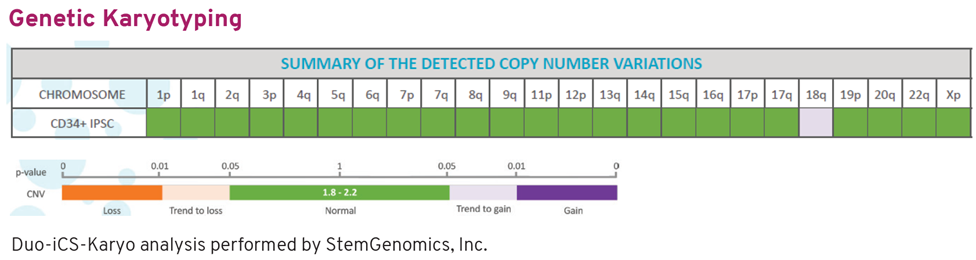
- Clean karyotype without genetic deletions, insertions or translocations
- Programmed without oncogenic c-Myc or Lin28 factors to ensure downstream safety
Key Research Applications
- High Throughput Screening
- Disease Modeling
- Toxicology Testing
- Tissue Engineering
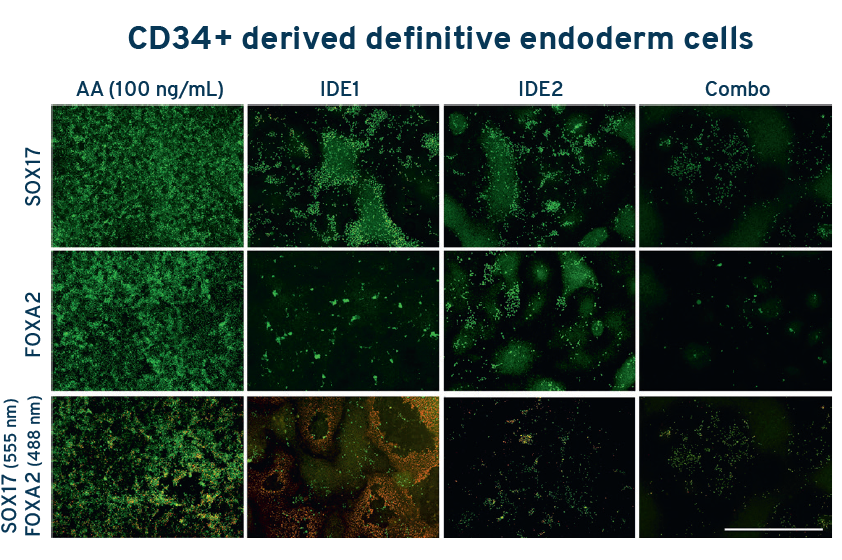
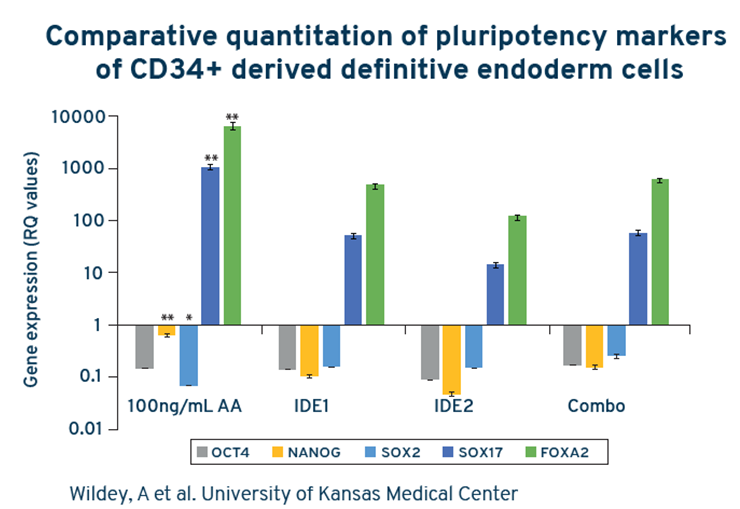
Human CD34+ normal progenitor cells normal progenitor cells differentiated into definitive endoderm cells and mature beta cell markers
CD34+ iPSC Genetic Karyotyping
| Stability & Storage | Storage Temperature | Storage Time |
|---|---|---|
| Human CD34+ iPS Cells | -80°C (preferably in the vapor phase of a liquid nitrogen storage unit) | 12 months |
| Human iPSC Base Media (not included) | 4°C | 3 months |
| Complete media (see Media Formulation Instructions on documentation) | 4°C | 14 days |
| Human iPS Growth Supplement (not included) | -20°C | Not applicable (use entire contents) |
Avoid repeated freeze-thaw cycles for cells. Avoid repeated exposure to room temperature and light for medias.